
Recently Kayak Session published an article about the Quebec freestyle kayaking scene, the lack of freestyle boaters in general compared to times gone by, and why competitions struggle to attract competitors anymore. It’s a question that could apply to anywhere in the world. Anecdotally, in my own local freestyle spots, when the feature is at prime levels it’s often only me and one other person there.
Facebook has been abound with people commenting on why they think freestyle isn’t more popular. Some say it’s because of the ICF and the focus on competition. Others are saying the boats should change and be made longer to make the moves look more impressive. Yet more say freestyle is just boring to watch. Other people think that the competitors should be taking place on massive waves and other features to make it more impressive to watch. Let me tackle each of these opinions and then offer up my own.
It is true that there is a big focus on competition within freestyle, but nobody is forcing anyone to go in that direction on a recreational level. But there is a lack of promotion of freestyle at a grassroots level, and I’ll come back to that a bit further into this article.
The idea of automatically equating freestyle with the ICF, competition, and finding freestyle ‘boring to watch’ as a reason for its lack of popularity is silly. We really do have to move on from the idea of freestyle being about the ICF and competitions. Just getting in your playboat and rocking up to a feature throwing ends and falling flat on your face has nothing to do with competition and everything to do with just spending a fun time on the water. For me, the latter is what freestyle is about.
Forget competition
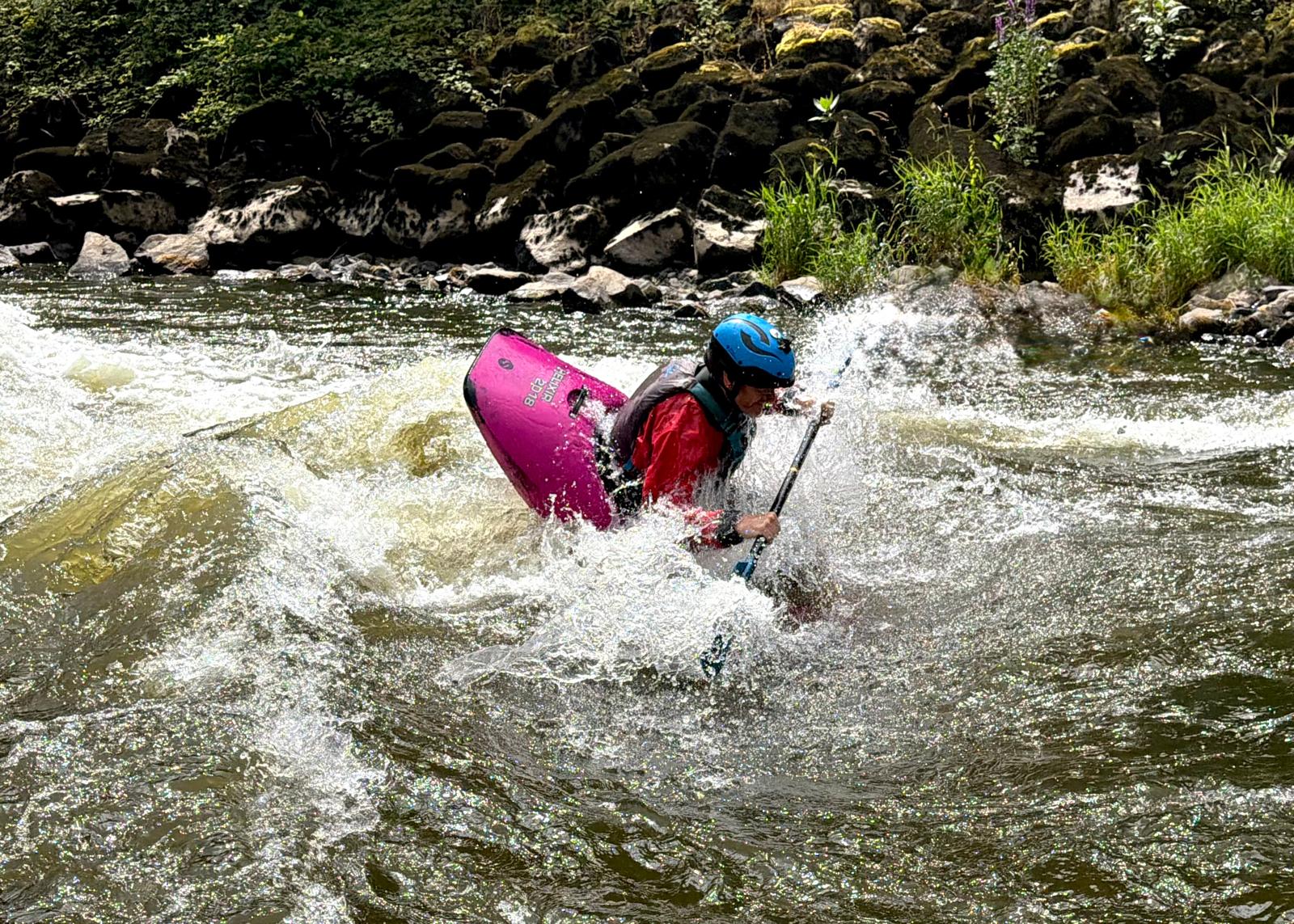
Freestyle for me is about having a no stress time on the water on a local feature that I don’t have to drive several hours to get to. There’s none of the faff having to run shuttles and organise lots of people. The boat fits inside the car, and I can stop for a food or drink break at any time. Going on the wave or hole is different every single time, and the feeling of speed on a good wave is amazing. And, with a good group of people freestyle is a huge laugh as well. All of these are reasons why, personally, I don’t understand why more people aren’t open to doing it. Competitions and the ICF have nothing to do with it. But, let’s take a look at some of the reasons I’ve seen others posit.
On the subject of making the boats longer, for instance a minimum length of 7ft, I completely disagree with this for several reasons. Firstly, just making a longer boat look more impressive during cartwheels isn’t going to solve the participation numbers issues. In fact it could have the reverse effect. Shorter, lighter boats are what has made freestyle more accessible to a wider range of people. Gone are the days when you needed abs of iron to throw a long boat around.
These days, competition freestyle has moved to really fast, snappy combos of multiple moves and huge air. Lengthening the boat will restrict the ability to do this along with restricting the already limited numbers of excellent freestyle features used for competitions around the world. Freestyle needs to account for waves and holes. Making the boat harder to throw around will also be off-putting to those of a smaller stature and strength.
Freestyle kayaking is boring to watch?
From a visual perspective, some people think freestyle is boring to watch because it’s the same moves being thrown. But, as I mentioned before, I don’t think this has diddly squat to do with participation numbers. I’ve always found it amusing that those who level that criticism don’t seem to apply it to other sports such as gymnastics, skateboarding, surfing, slope style, or BMX! Apparently according to them, they hold the nonsensical view that it’s only the sport of freestyle kayaking that does the same old moves over and over! If anyone can name a similar sport where there’s a new set of completely different moves being done each time, I’d love to know about it!
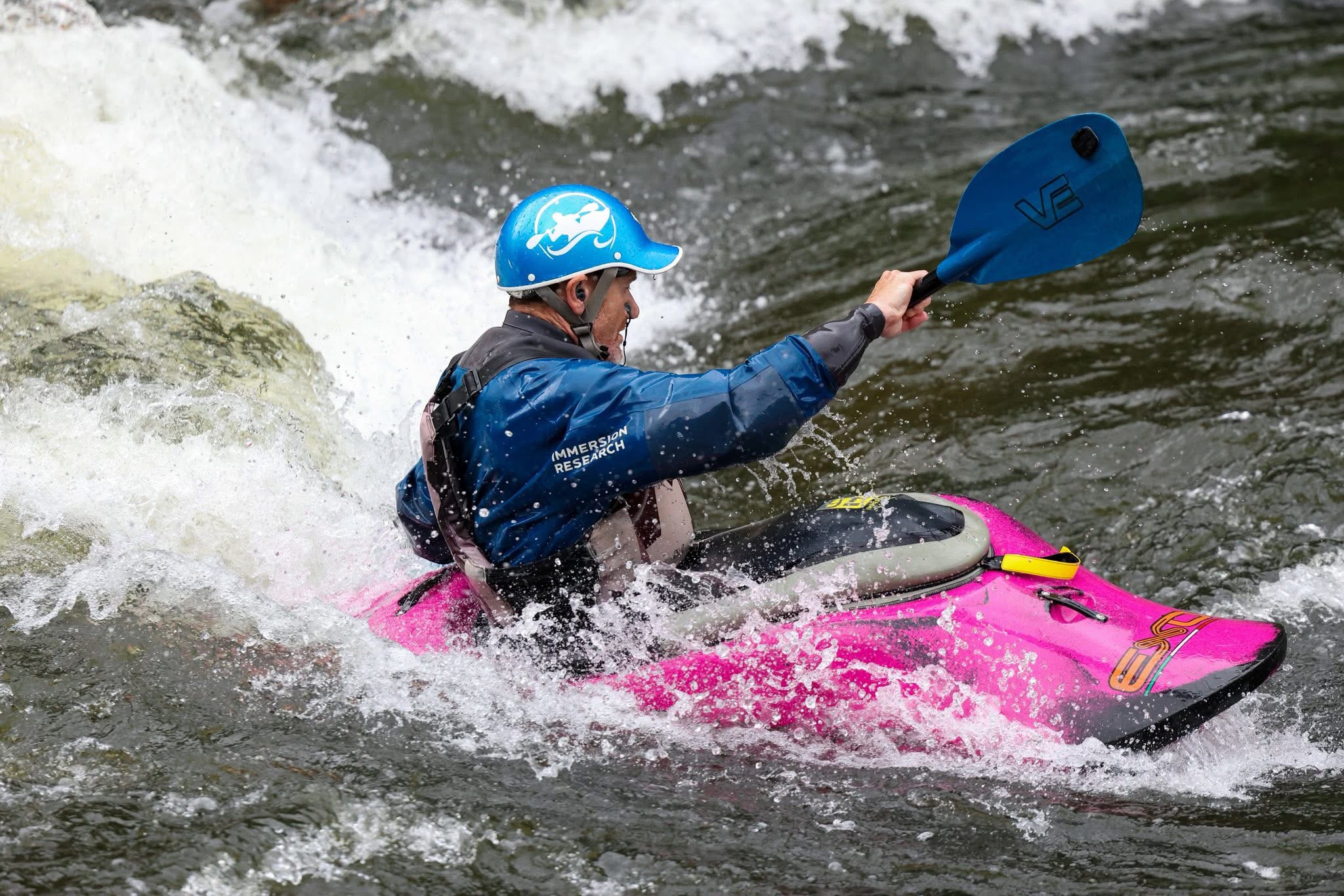
My take on this is that if you find freestyle boring, that’s your opinion and yours alone. Quite clearly, those who do participate in freestyle do not find it boring, otherwise they wouldn’t do it! I find football boring, but I don’t expect the entire rest of the world to agree with me. Furthermore, I don’t make it a point to tell football fans that I think their favourite sport is boring. Yet for some reason, those who think freestyle kayaking is boring feel the need to make it known to the world. We get it, you don’t like it. You don’t have anything positive to add, so move on. Freestyle for kayakers is about participation, not being an audience member!
But, if we are going to insist on discussing it from an audience perspective, freestyle competition isn’t just about watching the moves. Just like most other sports it’s about the tension of other aspects, such as someone who looks poised to win flushing off the feature and fighting their way back to it. Watching football isn’t really about marvelling at the sight of a plastic ball being passed from person to person. The reason people like watching football is because there’s a tension there in the ball getting intercepted, particularly when it looks like someone might score. It’s watching someone with skill manoeuvring around the opposing team members and the risk of them losing possession.
It’s the same with freestyle kayaking. There are tensions there beyond just watching the moves being thrown, and judging by the audience reaction when I’ve been to events it’s something those watching the sport understand.
Big features
When it comes to the idea of only using huge features similar to the ones Unleashed took part on; yes it looks impressive, but it’s also impractical. If your plan is to make freestyle more popular, the way to do it isn’t to make it less accessible. If we end up with boats that only perform well on massive features, but are crap when it comes to the much smaller ones that recreational boaters have access to, that isn’t going to help matters!
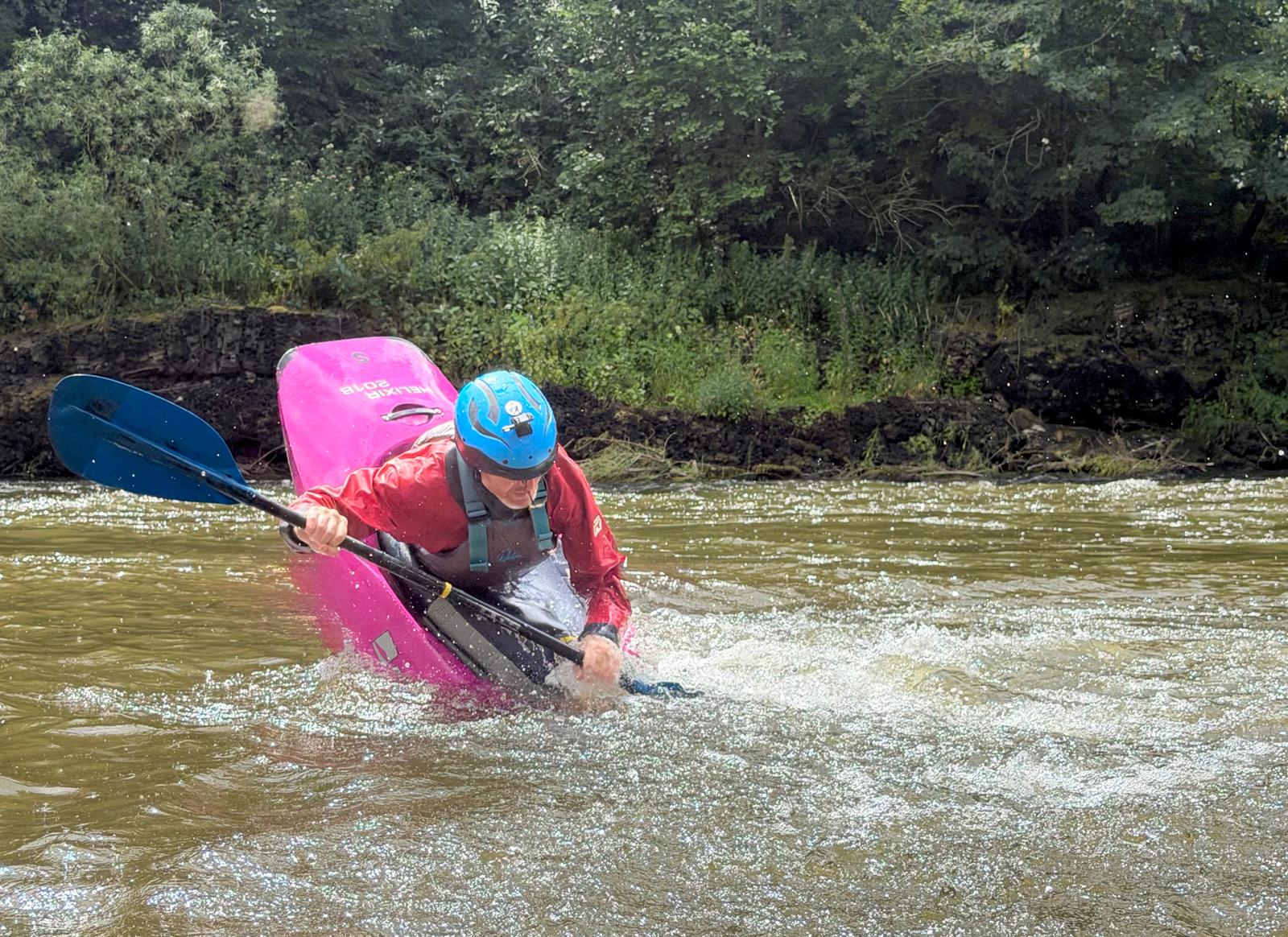
One positive aspect of the big freestyle competitions is that they are visible to the local communities where they take place. Locals can come and watch and be exposed to the sport. Live streaming is possible because they are often held in population centres. If you move everything out to the middle of the Canadian wilderness, how are you going to livestream with any ease? How are you going to show the sport off to local communities? You won’t, that’s how.
All you’ll end up with is a highlights reel that gets buried on social media and will only be watched by those who are already into the sport with no real wider exposure.
The real reason freestyle kayaking isn’t more popular
The are reasons why freestyle is seen as dying, but it’s not due to any of the reasons above. How do I know? Well, because I did a survey on this precise topic a couple of years back, and people told me why they don’t do freestyle.
One of the more common reasons that people didn’t take part in freestyle is that they didn’t know where to start, as well as a lack of local coaches. Another one was that they didn’t know many other people who did it, so it wasn’t quite as sociable for them as going on a river trip. Clubs have a huge part to play in promoting freestyle, but as you’ll see a bit later, some clubs actively discourage members from doing it. Another major factor was the lack of access to a feature they could practice on. Yet another was that not everyone can afford an additional boat or has the storage space for one. Particularly given the prices of boats these days.
There’s also a lack of choice of boat, too. In plastic, which is what 99% of people would be wanting to buy, there’s the Helixir, Helectron, and Rockstar V. That’s generally it for the modern designs. Three boats. Now, clearly if you are prepared to spend money on carbon there’s the Apex Rebound and the Huge Kayaks Freebird we can add to the list. But it’s still not a huge amount of choice, particularly for larger paddlers. Yes, there are older boats on the used market such as the Jitsu, but although they look similar to the new boats, it’s amazing how much more user-friendly the modern freestyle boats are compared to previous designs.
A lot of those reasons are catch-22. If you don’t do freestyle because nobody else you know wants to do it, then that’s going to end in a feedback loop. Lack of participation is also meaning that sales of freestyle kayaks is virtually non existent. So, how do we break those circles?
Visibility
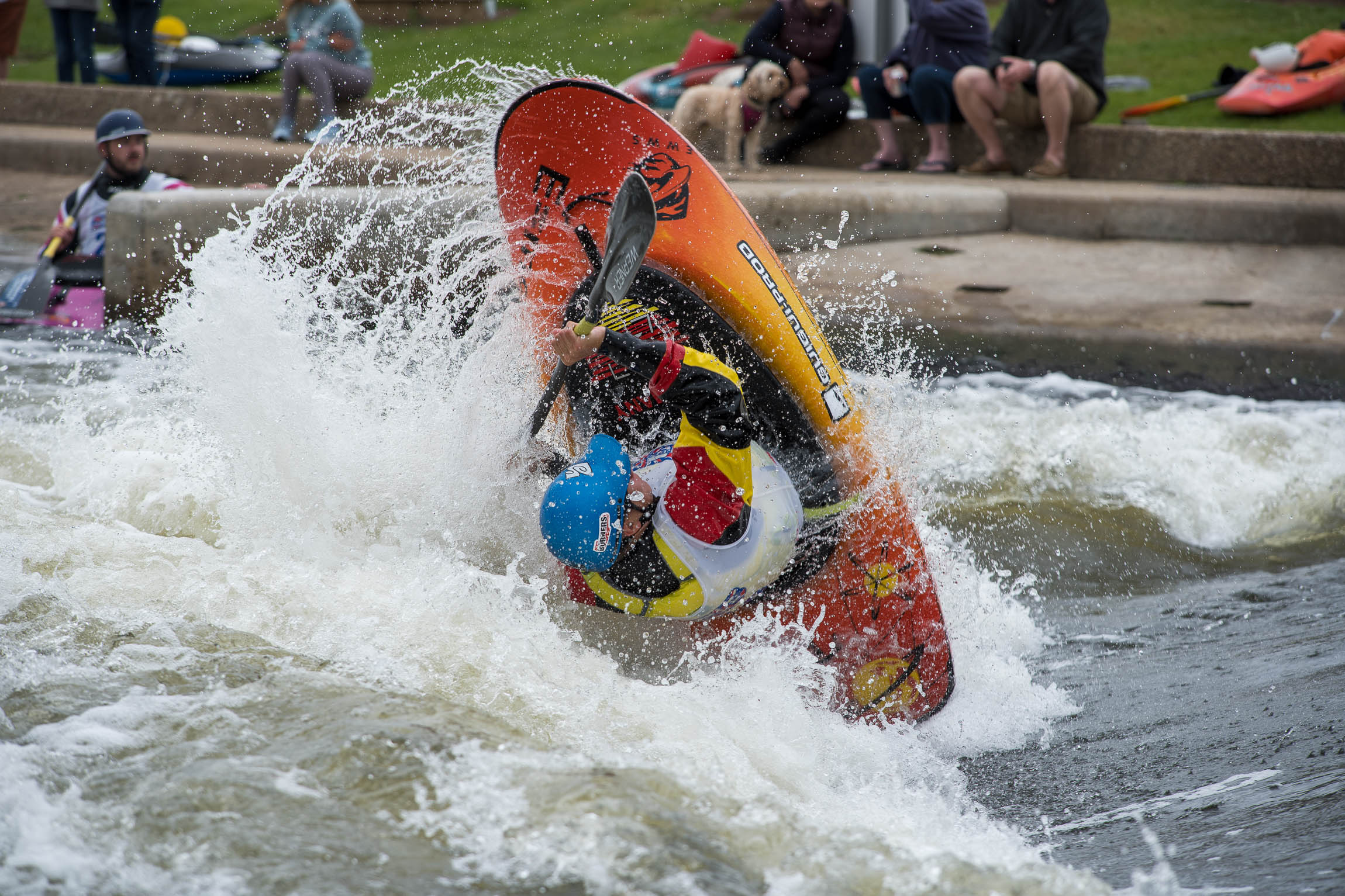
I’m going to add another one that I think contributes to a lack of participation. Visibility and desirability. If you look throughout all of the kayak manufacturers and equipment makers social media output, hardly any of it shows freestyle regularly. The focus is almost entirely on running big waterfalls and downriver playing in half slices. Sure, there are the occasional posts, but the visibility of freestyle compared to running rapids and drops is far lower.
It’s disappointing, given that those companies will be well aware that almost to a name, every current top kayaker in the world either got their start in freestyle or is damn good at it. Dane Jackson anyone? Even Aniol and Gerd got their start in freestyle, and it shows. Heidi Walsh, Eric Jackson, Bartosz Czauderna, Quim Fontané, Tom Dolle, Adrian Mattern, all either began in freestyle or still practices it. I could go on and on, top name after top name in kayaking and they would all have one thing in common that shaped their skill and confidence on the water; Freestyle. And most of them still practice the sport to a high level.
Most of the upcoming names in kayaking, those who will become the future Bren Ortons and Heidi Walsh’s such as the Ramsayer brothers are also big on freestyle.
Yet despite so many top level kayakers regarding freestyle as so intrinsically important to their kayaking skillset, it’s not something that is filtering down to the general grassroots and club level. It baffles me that most kayakers who use social media will be aware of the freestyle skills of these people, yet it doesn’t seem to twig why they do it! And I think that maybe down to that aspect not being not being as widely promoted as the river running. Freestyle is often portrayed very much as a tiny niche rather than as something that could, and possibly should, be part and parcel of your everyday kayaking options.
Let’s face it, river running is seen as more baddass. Generally it’s more appealing to be viewed as a badass rather than having a giggle and faceplanting in a hole. I guess in some ways it could be seen as asking a downhill mountain biker if they’d like to do some BMX freestyle. The difference is that freestyle boating does have significant ways to improve your overall boating. And it’s that aspect, along with the fact that it’s damn good fun, that should see the sport promoted far more for recreational WW boaters rather than as a competitive discipline.
Unfortunately I have come across clubs who appear to actively discourage members from getting into a freestyle boat. In the past, when clubs have been at my local feature I have let some of them have a go in my boat. More often than not they make the discovery about how much fun it is to mess around in a short, highly manoeuvrable kayak on a wave, only to have a snide “Oh, so you’re going to buy one of those boats now, are you?” style comment made by other members.
Now, I realise that kayak clubs are also seemingly a dying entity, but for now they are still around and they play an important part in introducing people to the activity. But if clubs view freestyle as some sort of oddity, that’s a major obstacle to it being more widely accepted and practiced. On my local rapid I’ve noticed more and more when clubs come to spend the day there, 99% of paddlers that turn up are in gigantic creek boats. It’s very rare to see anyone turn up in a freestyle kayak.
Without wanting to bang the drum yet again, doing freestyle massively improves your general boat control, edge awareness, ability to stay calm and in control even when the boat goes into extreme positions. It improves your rolling skills and confidence in them a thousand fold. It teaches you how to read a feature and get out of sticky situations on the river. In many ways, in addition to being fun and improving your general kayaking skills, freestyle should also be seen as a safety skillset.
Don’t agree with me? Well, listen to what none other than Bren Orton used to say. If he was paddling with people he’d never been on the river with before, if someone was an experienced freestyler, he knew he could trust their ability to roll and be able to get out of situations should they get stuck in a hole etc. In other words, he’d relax a lot more if he was paddling with freestyle kayakers for the first time rather than a complete stranger who had only ever done river boating.
So, I think that it’s both clubs and the paddling industry where I think things could be turned around. More open visibility and encouragement of freestyle in a recreational sense beyond competition, as well as emphasising what it brings to skills development for all ages. It shouldn’t be down to occasional voices like mine to try and promote the sport. It needs the voices who have a real influence on things to bang the freestyle drum repeatedly in order for things to be turned around. It needs to be seen as a desirable and ‘cool’ thing to do. There needs to be an aspect of FOMO when it comes to skills development.
Without those three components, freestyle will continue to be a tiny niche within the already small niche of white water kayaking. It’s a shame, because freestyle is in reality a much more accessible gateway into kayaking in general because of the lack of need for shuttles and travel, as well as the fact it can be practiced on flat water when there’s no white water available or in the swimming pool sessions during the winter.
Anyway, let me know your thoughts in the comments.


Recent comments