
A while ago I did a survey. It wasn’t particularly scientific, but I wanted to get an idea of what people who don’t do freestyle think about it. The survey was for people who don’t currently do freestyle, but who might give it a go given a chance, and also for people who are dead set against it. The responses were… interesting.
Now, first off, not everyone will want to do freestyle. In the same way that I’m not going to go and buy myself a sprint kayak or a wild water racer, some people just aren’t interested in freestyle. And that’s absolutely fine. The world would be a pretty dull place if we all liked the same things!
I’d like to tackle a few of the things that emerged from the survey, since there were a few common themes when it came to the comments about how people viewed freestyle. Most of the responses, 45%, were from people over 40. This could be as a result of me posting the survey on Facebook, which is increasingly being abandoned by the young and hip generations, as opposed to those who are old with hip problems! Overwhelmingly the responses were from people who identified as male. It would have been good to hear from a more diverse set of respondents, but here we are.
Interestingly, 50% of people who responded saw freestyle as something they’d like to have a go at, 22% saw it as something they might want to try, while another 22% said they had no interest whatsoever. 4.5% said freestyle was something they’d really like to have a go at. Some positive responses there.
As to the main reasons given as to why respondents hadn’t given freestyle a go, by far the most common reasons were that they weren’t confident enough as a paddler, and weren’t confident in their roll. The next most common reason was that respondents felt they couldn’t afford to own an extra boat, followed by 22% saying that they simply didn’t understand freestyle.
Interestingly, when it came to the way they viewed freestyle, 63% of people said they weren’t influenced by people like Dane Jackson or other ‘name’ paddlers, while 36% said they were. 54% said they weren’t inspired by people like Dane Jackson to give the sport a go, with 31% saying they are. 13% said they had no interest.
Personalised responses
Now, when it came to giving personalised responses, this is where things became more interesting. One of the questions was “If you are not a fan of freestyle, what aspect of it is the part that turns you off it?” Responses ranged from “I like surfing a wave or hole, but I can’t see the attraction of deliberately throwing myself upside down in it,” to “I prefer to stay upright” and “Very nice if it floats your boat but essentially the moves are very much the same- seen one seen them all” among others.
Not wanting to go upside was a common theme, which I find quite interesting, since I’ve always seen one of the points of WW kayaking in general as being to get thoroughly soaked! But, being upside down in a kayak summons a lot of psychological pressure, and as one respondent put to another question, sinus problems can be an issue for some people (which is why I wear nose plugs). Responses like that could also more point to the respondents lack of confidence in their roll, which relates to the percentages in the first part of the survey. It’s something I can fully relate to, given my own mental challenges with the sport recently.
But, one response was very interesting to me,
“I like surfing a wave or hole, but I can’t see the attraction of deliberately throwing myself upside down in it.”
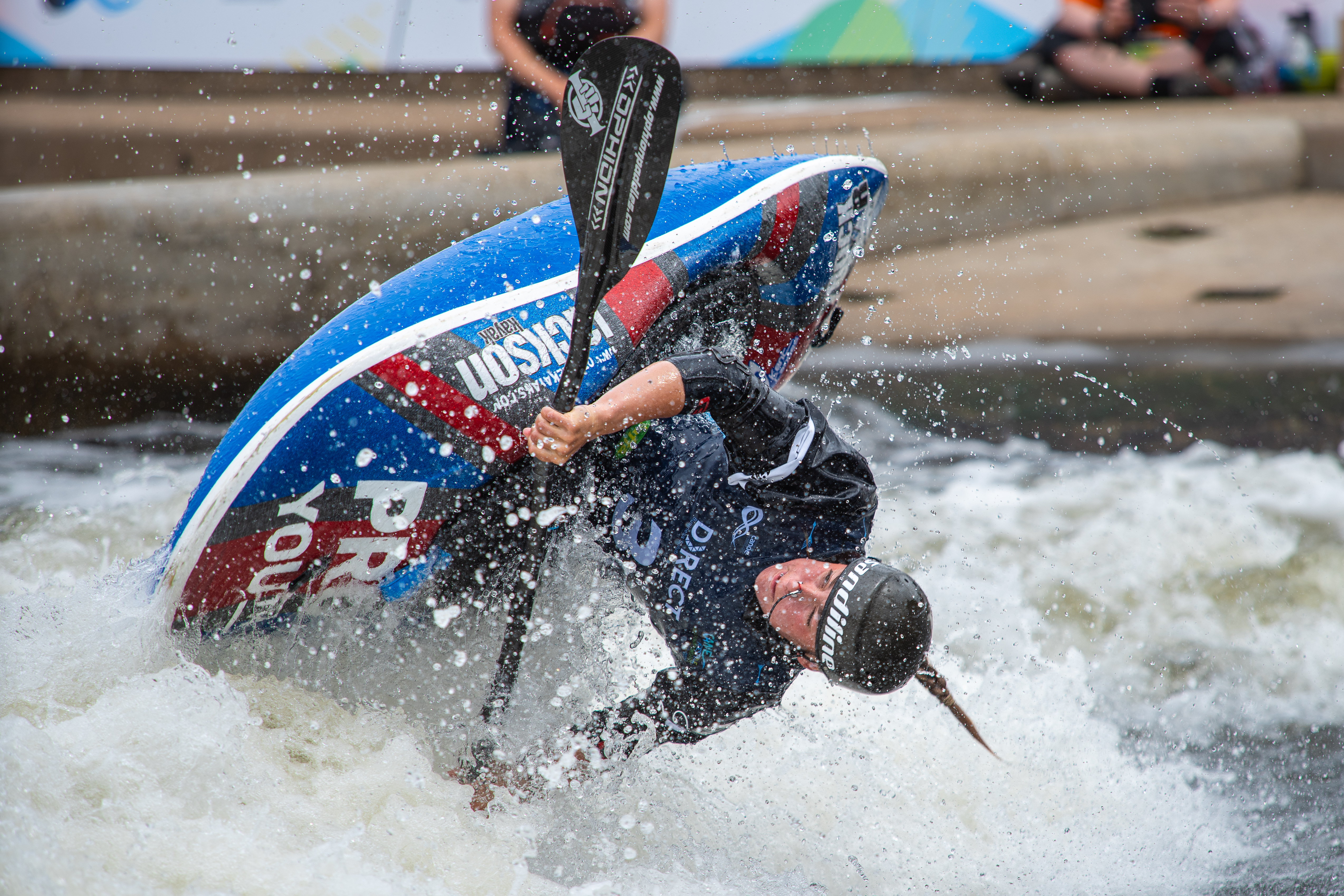
This response is interesting because generally in freestyle we aren’t actually trying to throw ourselves upside down in the water. Well, apart from the Felix move. Pretty much all other moves in freestyle are done with the intention of keeping control of the boat, going aerial, and not really going under water. With most moves we’re aiming to get the boat airborne. But, inevitably we are going to accidentally go upside down a lot when we get things wrong or when we’re learning a move.
Further, isn’t it more interesting to have the skill to do something other than just front surf a wave or get stuck in a perpetual side surf in a hole? On a glassy wave in a long slicey river boat, wouldn’t it be great to do a low angle roundhouse to quickly spin the boat around? Practicing will inevitably result in you going upside down a lot, but that’s no different to when you were a beginner learning how to break in and out of the flow.

All moves look the same
Regarding the moves all looking the same, I’m guessing this comes from a lack of understanding of what the moves are, which is a common response I have come across in the past. I will say that once you do understand them and/or have tried them yourself, they do make perfect sense. It’s similar for me with other sports. At one time I had no clue what was going on in Rugby, until I watched a match on TV with someone who could explain it. Once I understood what was going on, I actually enjoyed watching it.
It’s also the same for freestyle kayaking. I know this first hand, because at one time in my kayaking life I too thought that freestyle was silly, with everyone doing the same move over and over! I just didn’t see the point of it. But, once I began freestyle myself learning what the moves were, along with the competition rules etc, I could then enjoy it. However, I don’t want to get focussed on competition, since I like promoting the idea of freestyle as a fun thing to do rather than as serious competition.
One person responded “It’s gay as f***”. Well, to this I only have one thing to say. Gay people are some of the most stylish and fun people I know, so I guess that makes freestyle “stylish and fun as f***”!
In response to the question “If you are not a fan of freestyle, what could change to make it appealing to you?” one of the most interesting responses was,
“A ‘beginners’ route in – there’s not a lot of absolute beginner options out there, maybe with some time in flat water to get an understanding of how the boat handles and what the key differences are from river running. I’d love to get involved but given I’m a total beginner at freestyle I don’t know where to start!”
Now, this is an interesting response for a few reasons. It perhaps speaks to the respondent’s club or group not offering any opportunities to try a freestyle boat out. There are some clubs that can be very anti-freestyle, which is a shame, but I don’t know what the specific reasoning is here. That said, beginner opportunities are quite common. Groups such as Freestyle Fun and Essex Freestyle often run intro days offering the very things mentioned. In fact, intro to freestyle days are pretty common, particularly with the She Paddles events. At Telford Canoe Club we try to regularly organise freestyle evenings and days where complete beginners to freestyle can give things a go under the watchful eye of an experienced freestyle coach.
In response to the question “Is the lack of a suitable local freestyle feature/venue a reason why you haven’t tried it?” 43% of respondents said that the lack of an accessible feature was the main reason they hadn’t tried the discipline. That points to a bit of an issue, and one that needs addressing. It’s also one I can fully relate to. While we have a small local feature at Jackfield that I can get to in half an hour, it’s often flushed out from the river level, and it’s quite flushy even in good levels. Otherwise, I have to drive at least 1.5 or more hours to get to places like HPP or Llangollen. And of course, once we start talking about manmade courses like HPP and Cardiff, cost of participation becomes a significant factor. At least for the white water aspect of freestyle.

Is freestyle kayaking a positive thing?
On a positive note, 75% of respondents said that freestyle gave a positive image of kayaking. 4.2% said it didn’t. And here is where things get really interesting, and quite surprising. When asked to give a reason why they didn’t think freestyle gave a good image of kayaking, one responded,
“There’s zero practical application.”
Now, this is a response that I have heard many times before. Respectfully, I don’t really know where to start with how misinformed and badly understood such a statement is. I’ve covered the reasons why doing freestyle applies directly to improving your river running and general kayaking before, but here are a few of the main ones.
- It massively improves your roll
- It hugely improves your ability to deal with difficult situations in your boat under pressure (such as if you get stuck in a hole on a river run)
- It gives you the skills and strategies for dealing with scenarios such as the one above
- It hugely increases your overall boat control and edge awareness
- It gives you the ability to make the most of any play features on a river run, from rocks splats to kick flips.
There are many other practical applications, but those are just a few for starters. But, in addition I will say that there’s a very good reason why any top named paddler you care to think of does freestyle. The late, great Bren Orton always said that if he was going to paddle with people he hadn’t paddled with before on a river, he’d much rather paddle with people that had freestyle experience because of their increased ability to get out of sticky situations under pressure.
Another interesting response was,
“the main reason for not engaging in freestyle is the availability and locality of affordable and regularily accessible coaching / mentoring. I have the boat and kit etc ready to go, but £150 – £200 a day coaching isn’t feasible.”
Now, a lot of this is the reason why GB Freestyle is trying to promote the sport at the grass roots level, working with clubs to make low cost freestyle coaching accessible, as well as increasing the number of coaches in clubs who can coach freestyle via funding schemes. But, the comment above also points to another misconception, that freestyle is quite formalised.
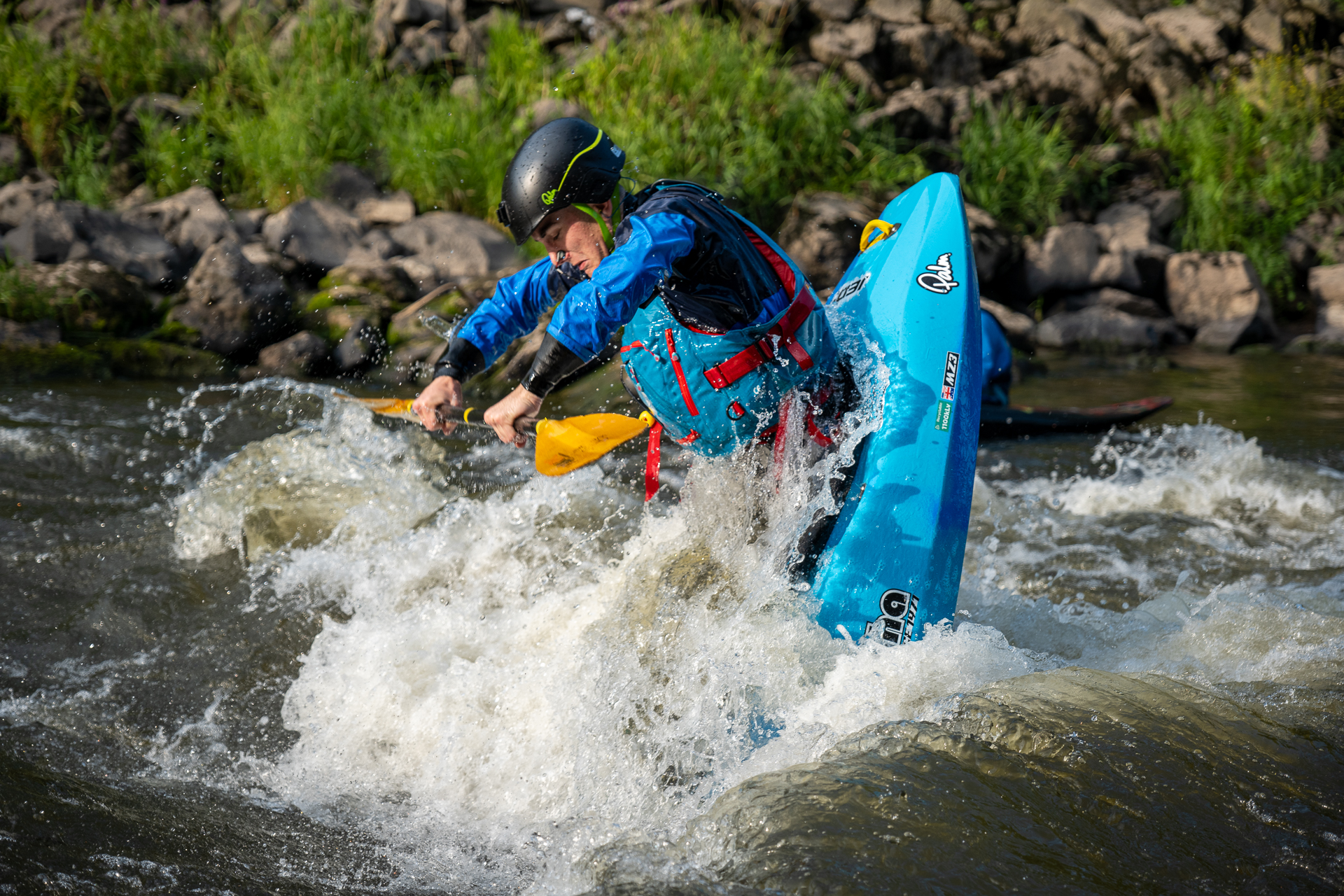
Certainly, in ICF competition the rules are quite formal. But for me, freestyle isn’t about competition, but instead it’s about messing about in a boat while having fun. Being coached isn’t a requisite for trying freestyle. Simply getting in a playboat on a feature and trying some basic spins is a good start. Try plugging the nose in to see if you can pop out etc. A fair few at my club use the freestyle boats on the local feature simply because it makes it more fun at certain levels than a great big river boat.
Conclusions
Whilst the survey wasn’t an in-depth scientific study, it was interesting, and I think a lot of the responses point to a lack of understanding of the discipline and confusion as to what the point of it is. Lack of roll or boating confidence were also common reasons, along with a perceived lack of opportunity for beginners to learn it. From the head games aspect of things, I can relate fully to the confidence side of things.
But, the truth is that despite my own ongoing head game issues, repeated exposure to the environment will actually bring on your confidence. Going to Cardiff White Water and getting on the wave at the end of the course is a great way to build up in a safe way. Particularly in the summer when the water is warm and swims are pleasant. The great thing about freestyle is that you don’t actually need white water to start, or even advance. Any piece of local flat water such as a canal or lake can be used to learn how to get the boat vertical. And there are quite a few tutorial videos on YouTube, particularly Bartosz Czauderna’s excellent Freestyle Unlocked series.
Regarding coaching and intro sessions for freestyle, keep an eye on Telford Canoe Club, where we run open sessions with well known freestyle coaches and champions throughout the year. Gav Barker often runs sessions at HPP and at the Stanley Embankment wave, and there are a whole host of additional freestyle specialist coaches to choose from in the UK, including Lowri Davies, Chris Brain, Matt Stephenson, Tamsyn McConchie, Chris Evans, and Rock the Boat Activities to name a few.
If you do have an interest in starting freestyle, leave a comment below, and if you see me on the water and want some advice, just holla me over.
 The Kayaking Journal
Recent comments